


Supporting Emotional Regulation in Children
 Overview
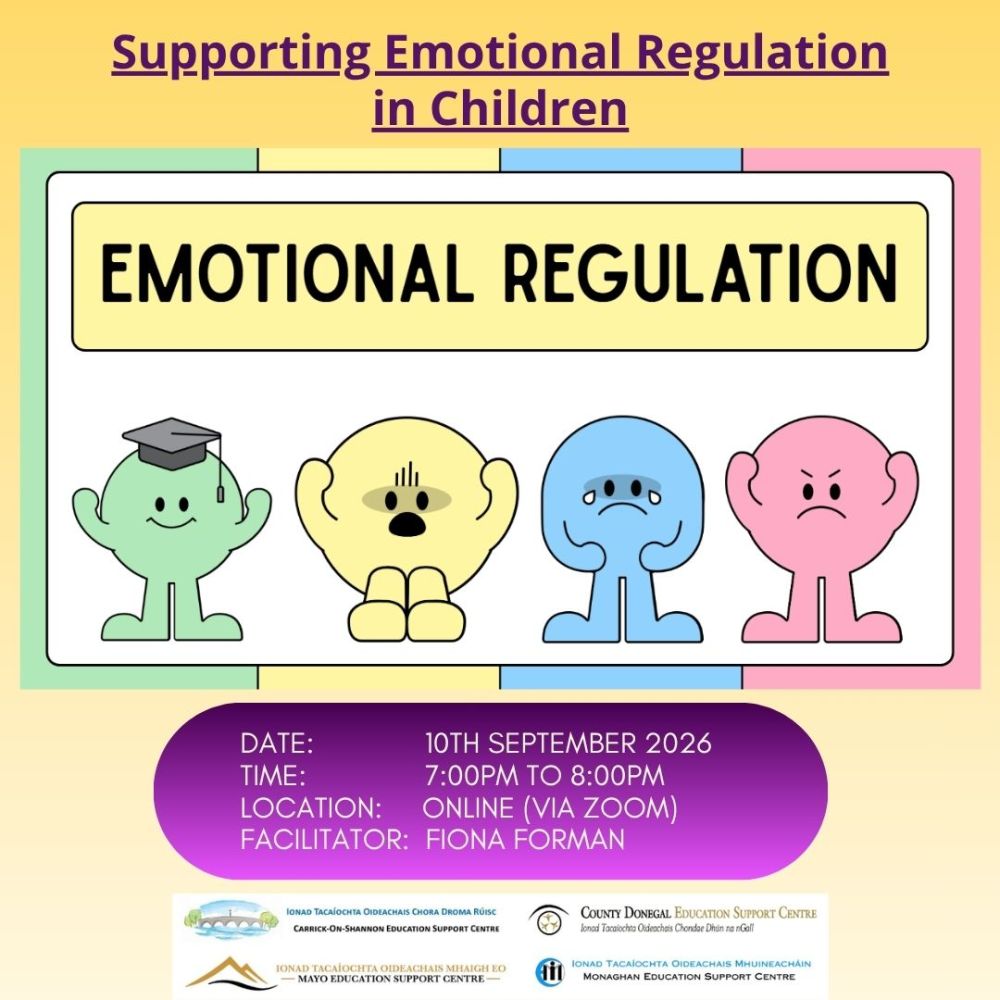
Emotional regulation is the process of consciously managing emotions, to achieve personal growth, fulfilment and goal satisfaction (Mayer & Salovey, 1997). It is a key skill for well-being and resilience in children and is also vital in order for them to develop their potential in many other areas, including academic success. This talk explores emotional regulation and provides practical strategies for teachers to support its development in children.
Learning Outcomes
Participants will:
1. Understand the meaning of emotional regulation & its role in wellbeing & resilience
2. Understand the key factors which affect the development of emotional regulation in children
3. Be able to utilise practical approaches & strategies to support the development of children's emotional regulation
Facilitator - Fiona Forman
Fiona Forman is an author, speaker, facilitator, and trainer in the area of well-being and Positive Psychology in education and parenting.
Fiona holds an M. Sc. in Applied Positive Psychology, the science of well-being, from the University of East London. Having spent many years as a teacher, she is passionate about placing well-being at the heart of school and family life, and she has seen first-hand the many benefits this brings to both young people and adults alike. She is the co-author of Weaving Well-Being, an SPHE programme for children which is now widely used in Ireland, as well as being the author of Welcome to Well-Being, Wired for Well-Being, and Tools to Thrive.
Fiona is also the mother of 2 young adults, which has deepened her awareness of the importance of equipping our children with the support and skills they need to thrive and flourish, despite the challenges of life.
Her parenting book, BRAVER THAN YOU BELIEVE: A Parent’s Guide to Building Children’s Resilience using Positive Psychology Skills, has recently been released.
Course Details
| Start Date | 10-09-2026 7:00 pm |
| End Date | 10-09-2026 8:00 pm |
| Individual Price | Free |
| Location | Online |